The app
A Real Voice, From the First Hour
Effara is an iPad AAC app for nonspeaking autistic children and their families. A child taps a symbol; the app speaks the word aloud — instantly, offline, every time. It is built for the parent at the kitchen table: a serious communication tool your family can start using tonight, without becoming AAC experts first.
Honest status: Effara is in a private beta (Apple TestFlight) ahead of its App Store launch. At launch it will be a one-time purchase of $79.99 — no subscription, ever, and no ads or accounts at any point.
What makes it different
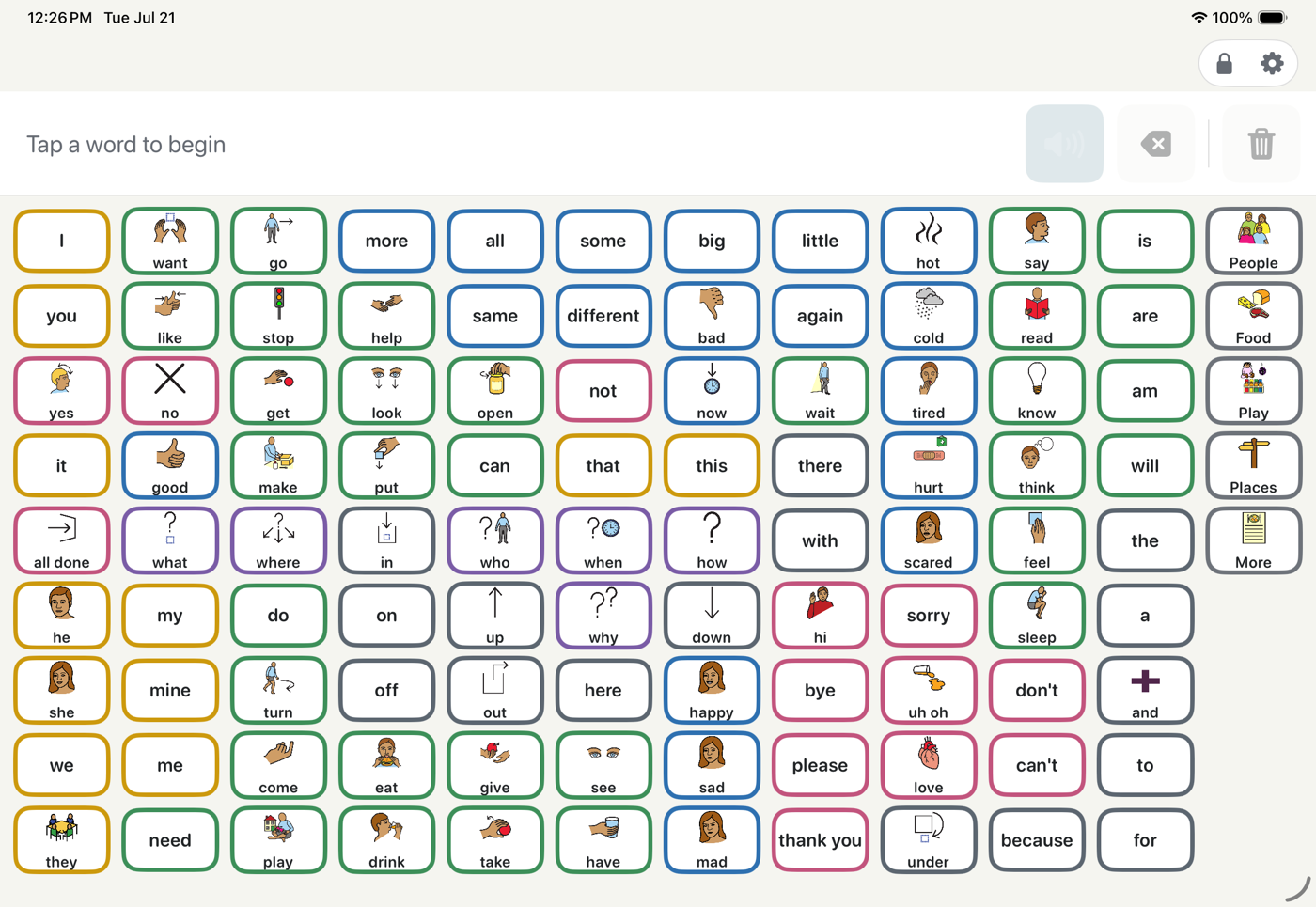
- Full vocabulary from day one. We presume competence: your child never has to earn the right to words. Effara ships a robust core-word board from first launch — core words do roughly 80% of the work of everyday communication — and reducing overwhelm is done by hiding words, never by taking them away or rearranging them.
- Words stay where you left them. Buttons never move, which supports building the motor memory that makes finding a word automatic over time — and a calm, predictable layout a teenager isn't embarrassed to hold.
- It speaks instantly, offline. On-device speech is the primary engine. No connection required, in the car or on a plane — and a single failure to speak is a failure we treat as serious.
- You can start alone, tonight. Onboarding is the product: a usable board in minutes, with the highest-value skill — gentle modeling — coached inside the app in plain language. No specialist appointment required to begin.
- Private by design. Everything stays on the family's iPad: no accounts, no tracking, no analytics in the app, no Effara server. What your child says belongs to your family.
- Personal, quickly. Add photo buttons and family voice recordings in under a minute — a parent's recorded "I love you" is a first-class button, not a workaround.
One board, from first words to a full voice
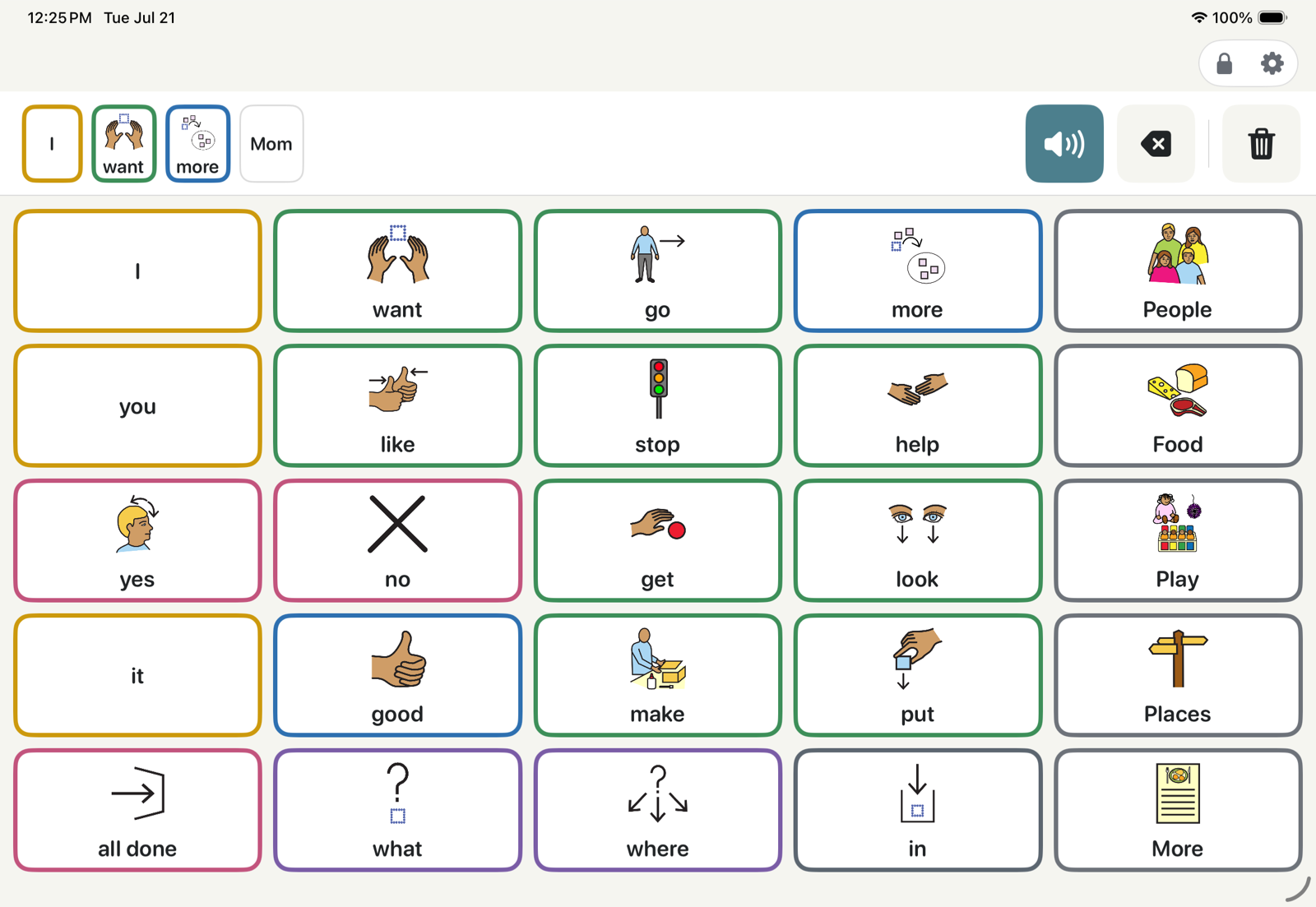
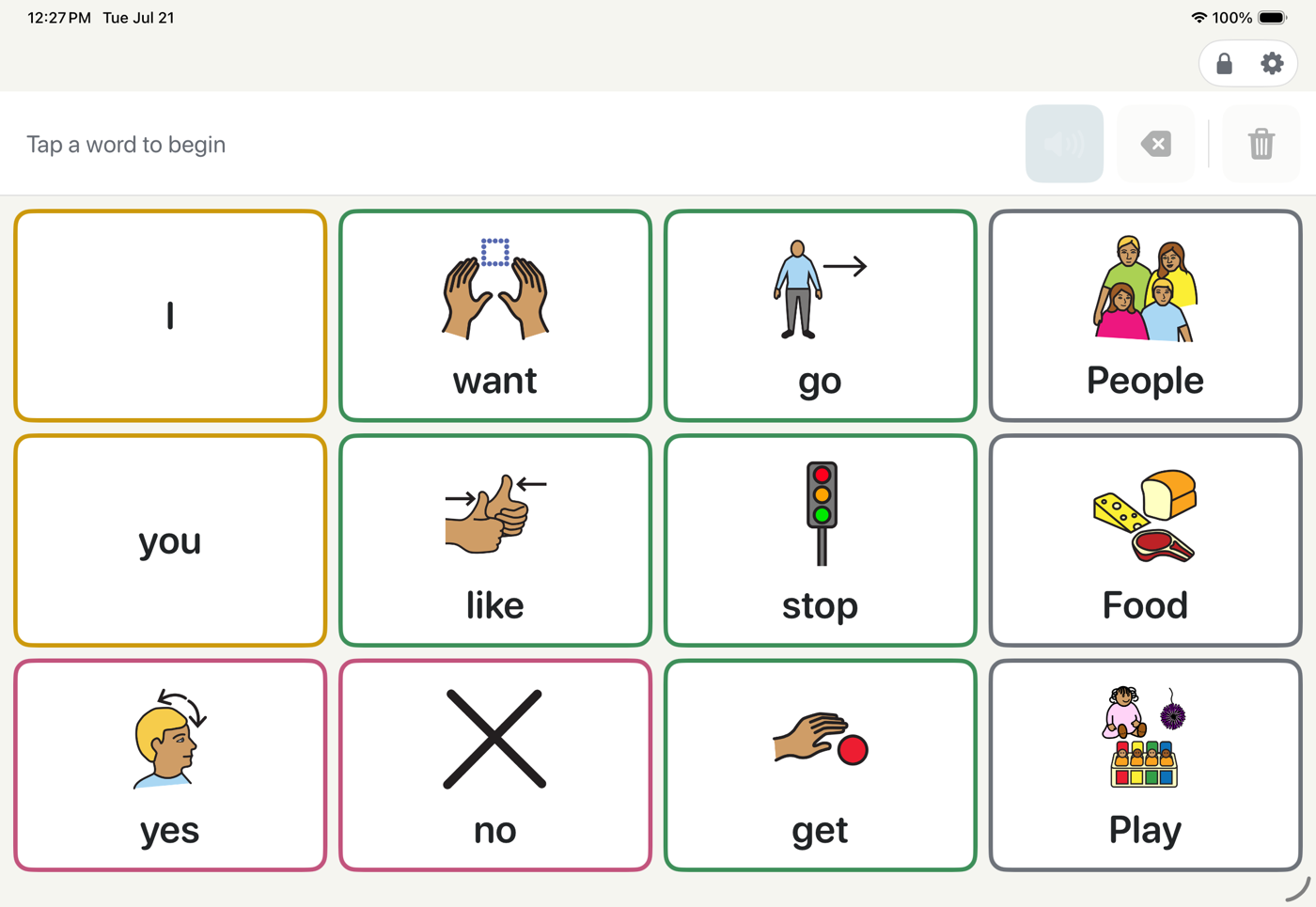
Every button size shows a window onto the same fixed board — from nine very large targets up to all ninety-nine words. Growing means revealing more, never rearranging: a word a child learns today is in the same place years from now, which is how finding words becomes as automatic as flipping a light switch.
The evidence behind the design
- A robust vocabulary from day one — because a few hundred flexible core words do roughly 80% of the work of everyday communication, and beginners deserve real language, not a six-button ceiling. The evidence, with sources →
- Words never move — because consistent locations let word-finding become motor memory, and clinical guidance says to reduce overwhelm by hiding words, never rearranging them. How good AAC systems work →
- Built-in modeling coaching — because aided language input is the best-supported thing a family can do, and it's lighter than most parents fear. The technique, honestly explained →
What we won't promise
Effara will not promise to make your child speak — you should be skeptical of anyone who does. What the research supports is narrower and still important: AAC does not hinder speech and is often associated with modest speech gains, and it gives your child a way to communicate now. We've written up the evidence honestly, with sources, in our articles for families — starting with "Does AAC delay speech?". Effara is a communication tool, not a therapy or a cure, and it doesn't replace a good speech-language pathologist — it just refuses to make you wait for one to begin.
Be told when it launches
One purpose only: we store your address and the date you joined — nothing else — email you once when Effara is available (we may also personally invite a few people from this list to the beta first), and then delete the list. No newsletter, no sharing, unsubscribe any time. Details in our privacy policy.
Questions first?
Start with the articles — they answer the questions families usually ask about AAC, honestly and with sources. The FAQ covers the app-specific ones (pricing, the adult lock, what happens offline). Or just write to us; a person reads it.